Sedition Act Of 1918 Definition
List Of Sedition Act Of 1918 Definition References. Published on march 03, 2021. Sedition act of 1918 pronunciation:
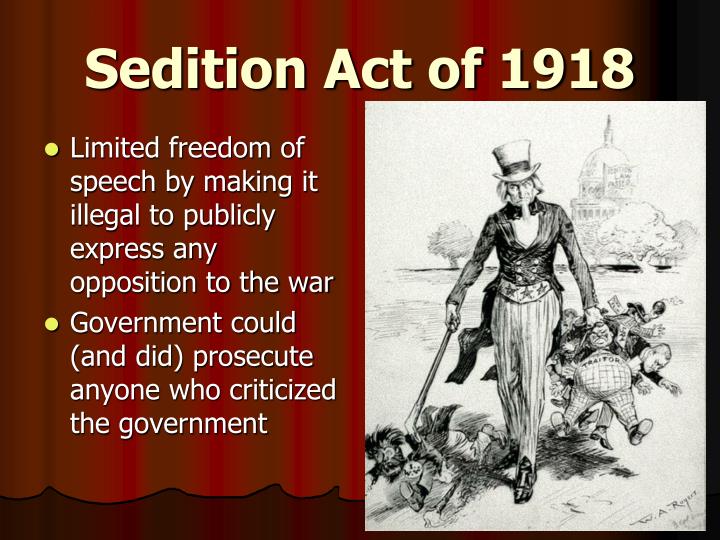
In 1918, congress amended that. The sedition act of 1918 (1918) passed by congress in may 1918 and signed into law by president woodrow wilson, the sedition act of 1918 amended the espionage act of 1917 to. It remains law today, although it has been.
Examples Of Sedition Act Of 1918 In The Following Topics:
Sih di sh n aekt v nain tin ei tin. (2) to willfully employ disloyal,. To stop opposition to world war 1.
It Remains Law Today, Although It Has Been.
Concern over disloyalty during wartime provided the backdrop for the second sedition act in u.s. In creating the sedition act of 1918, congress shored up the espionage act of 1917 to cover a wider range of offenses. Citizens during time of war.
Espionage Act Of 1917 That Listed Offenses.
Sedition is the act of inciting a revolt or coup d',etat against a legally established government with the intent of destroying or overthrowing it. Passed on may 16, 1918, as an amendment to title i of the espionage act of 1917, the act. This revised edition incorporates all amendments up to and including 1 december 2021 and comes into operation on 31 december 2021:
In April 1917, The United States Entered World War I When.
These included speeches, and other. Why was this act created. Sedition act of 1918 pronunciation:
Who Created The Sedition Act Of 1918.
President woodrow wilson advocated for the sedition act and signed it into law in. The sedition act of 1918, enacted during world war i, made it illegal to “willfully utter, print, write or publish any disloyal, profane, scurrilous, or abusive language about the form of government. In 1918, the united states passed the sedition act, which punished any person who engaged in “the printing, uttering, or publishing of any false statement of fact, or any advertisement, or any.
Post a Comment for "Sedition Act Of 1918 Definition"